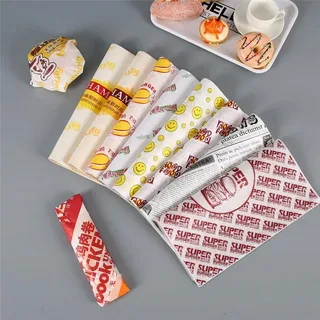
Packaging is not only a form of protection but also seems to be a silent brand ambassador that says a lot about a business. Custom food papers are one of the most versatile packaging materials that boast branding capabilities. Spatial organization of food paper entails optimising layouts in such a way that each design element conveys a message. Quality layout design creates a good impression and a useful paper. Layout design is one of the factors that business gets negligent about, yet it affects the perception of customers. With the aid of strategic graphics and logos positioning, as well as patterns, plain sheets might be turned into effective marketing means. The optimized layout is not merely good to see; it supports identity. To make a brand have a lasting impact, it is important to learn how to refine these layouts.
Layout Importance
The most important part in the success of custom food paper with a logo is the design layout. The arrangement places all the elements of branding, patterns, or art to be placed in the right positions to attract attention. The use of optimized layouts also helps in making food businesses more attractive to customers, as they would ensure their packaging remains consistent. The typography, the spacing, and the graphics should be coordinated to give balance. When a layout is messy, it may not give the brand a message. It is how the design is placed strategically that keeps the design clean and professional. It is not optional but mandatory to implement layout optimization in order to provide packaging with a suitable voice.
Visual Balance
Visual balance is the key to the success of wholesale custom food paper packaging. The good balance helps avoid jamming, and the content must be easily identifiable. Symmetry and spaces contribute so much to the perception of packaging by the viewer. Contrast usage also allows elements to show without overpowering the overall appearance. Care should be taken by food businesses to ensure that every element of their design has a certain visual weight. A graphic that is too elaborate may drown crucial information. Symmetrical arrangements promote an attention aid because customers are not attracted by the surrounding mess.
Brand Consistency
One of the key points in custom printed food paper is to have the brand identity. This layout must follow the branding guidelines of a business so that the layout of all packagings is consistent. The use of color schemes, logos, and typography has to be done in a manner that reflects the personality of the brand. Regularity in the application of these leads to familiarity and credibility in the opinion of customers. When it comes to optimizing the layouts, businesses should keep in mind that a certain repetition is not monotony but a reinforcement mechanism. A regular design builds a brand’s familiarity. Brand messages will not be diluted by optimization of layout.
Design Placement
A good custom food paper wholesale design layout must possess intelligent positioning of key design elements. The logos should be depicted in positions where one can be able to see immediately without dominating other graphics. Repetitive structure can also be done with reference to the folds and the cuts of the paper. The designers must take into consideration how the food will rest on the paper and whether it obscures some important things. The placement should leave the picture noticeable to the customer even when food is covering part of the sheet. Strategic fit enhances the aesthetics and the usability. It also works out more economically in printing less space wasted.
Pattern Flow
Optimized layout design in the custom paper eliminates pattern flow in the sheet. Patterns are not supposed to have abrupt breaks, which hinder the visual rhythm. Grid systems are commonly used by designers to come up with ordered compositions that make the paper appealing. The flow also requires the overall movement of the eye on the design. Duplication or collisions of elements are confusing and loosen the entire presentation. Good flow gives packaging a feeling of intent as opposed to chance. The flow can assist in making the brand look professional and easily recalled.
Typography Use
The use of typography in layouts needs a similar concern as graphics. The written details on the packaging influence the perception of the customers in relation to the choice of font, size, and placement. When designing using custom food paper with a logo, it is advisable that clean fonts be used as they are easily readable in the layouts. The typography should not overshadow graphics in terms of visual graphics, but rather must be compatible with each other. The interior designers are expected to observe appropriate spacing of words and align them with the grid. The larger fonts can be used to feature taglines, and smaller fonts used to present supporting information. Decorative typography may undermine the readability, but again, it is all about balance.
Conclusion
This is because optimizing layouts can communicate brand identity effectively using wax paper with logo. Businesses benefit from designs that are not only attractive but also professionally organized. Elements like positioning, typography, and pattern movement generate visual unity on every sheet. The packaging is likely to be remembered by the customers when it feels consistent with proper design. No detail should be left behind to make sure the food paper looks attractive even after its use. Water tests and corrections continue to smooth layouts until they are ready to be used on a large scale. It is bundled with a smart optimization that turns basic packaging into a branding measure. Companies that have perfected layouts in the custom food paper wholesaling sector have an upper hand when it comes to presentation.