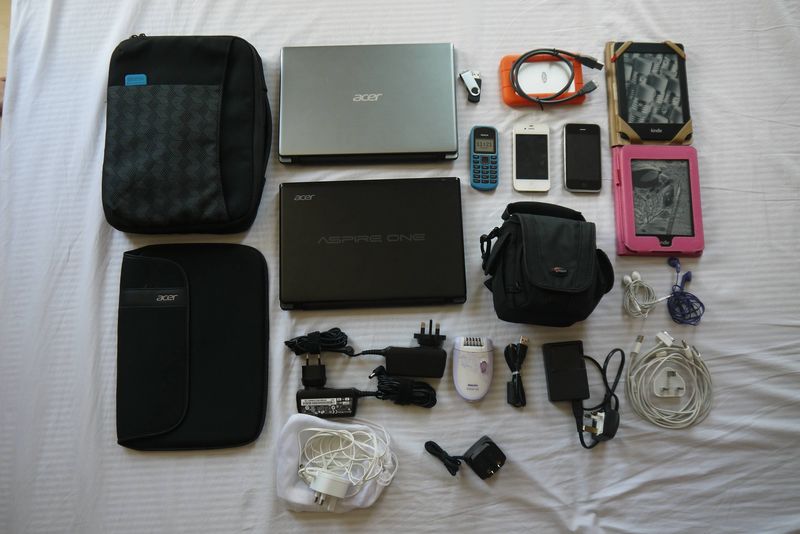
You’ve meticulously rolled your clothes, secured your passport, and booked your tickets. But as you stare into the abyss of your electronics drawer, a familiar anxiety sets in. Which cords are essential? Will your charger work? Is it worth lugging that heavy laptop for a few emails? The line between being prepared and being weighed down by technology is thinner than a smartphone.
Packing the right electronics can transform your trip, keeping you connected, capturing memories, and navigating unfamiliar streets with ease. Packing the wrong ones, however, leads to a tangled mess of stress, unnecessary weight, and potential security headaches. This guide is designed to help you strike the perfect balance, dividing your tech into three clear categories: the non-negotiable essentials, the situational maybes, and the items best left at home.
Part 1: The Non-Negotiable Essentials (The “Must-Pack” List)
This is your core survival kit. Forget any one of these, and you’ll likely feel the consequences from the airport lounge to your hotel room.
The Power Hub: Your Connection to Energy
In the digital age, power is life. Your first priority is ensuring you can keep your devices charged, no matter where you are.
- A Universal Travel Adapter: Don’t gamble with a single-country adapter. A quality universal adapter with swappable plugs or integrated pins for North America, Europe, the UK, and Australia is a one-time investment that pays for itself on your first multi-country trip. Look for one with built-in USB ports for added charging flexibility.
- A High-Capacity Portable Power Bank: This is your lifeline when you’re out exploring all day. A power bank with a 10,000 to 20,000 mAh capacity can fully charge a smartphone 2-4 times. Crucial tip: Always pack your power bank in your carry-on luggage. Airlines prohibit large lithium-ion batteries in checked baggage due to safety risks.
- A Multi-Port USB Wall Charger: Hotel rooms are notoriously short on outlets. A compact, multi-port (e.g., 4-port) USB charger allows you to juice up your phone, power bank, and e-reader simultaneously from a single wall socket. GaN (Gallium Nitride) technology is a game-changer here, offering more power in a smaller, cooler-running package.
Your Digital Lifeline: Communication & Navigation
Your smartphone is the undisputed champion of travel electronics. It’s your camera, map, translator, boarding pass, and entertainment center all in one. Before you leave, ensure it’s unlocked and research options for a local SIM card or, even easier, an eSIM plan for seamless data access upon arrival.
Noise-canceling headphones or earbuds are a close second. They are worth their weight in gold for drowning out engine noise on long flights, creating a bubble of peace in a busy hostel, or simply enjoying music without cranking the volume.
The Connectivity Kit: Cables & Organizers
The glue that holds your tech world together. Pack a charging cable for each device (USB-C, Lightning, etc.), and consider bringing one longer cable (3-6 feet) for those hard-to-reach hotel room outlets. An absolute must-have is a dedicated cable organizer—a simple pouch or roll that prevents the dreaded “cord octopus” from forming at the bottom of your bag. Toss in a microSD card for extra camera or phone storage, and your core kit is complete.
Part 2: The “It Depends” List (Assess Your Trip)
This category requires honest introspection about the nature of your trip. A business traveler, a photographer, and a beach vacationer have vastly different needs.
For the Workation or Digital Nomad
- Laptop/Tablet: The key question is, “What work will I actually do?” For checking emails and light editing, a tablet with a detachable keyboard may suffice. For coding, heavy design work, or extensive writing, your laptop is essential.
- Laptop Stand & External Peripherals: If you plan on working for more than an hour at a time, a lightweight laptop stand and a compact Bluetooth keyboard/mouse can save you from neck and wrist strain. For the serious professional, a portable monitor can dramatically boost productivity.
For the Photography & Video Enthusiast
- Dedicated Camera: While smartphone cameras are incredible, a mirrorless or DSLR camera is for those who prioritize image quality, optical zoom, and creative control. Be honest with yourself—if you’ll just use auto mode, your phone might be better.
- Supporting Gear: This includes extra lenses (pack purposefully), additional batteries, and more memory cards than you think you’ll need. A portable tripod or flexible Gorillapod is essential for stable low-light shots, landscapes, or self-portraits.
- Drones: A Major Caveat: The allure of aerial footage is strong, but drone laws vary wildly by country and even by city. Research restrictions and registration requirements thoroughly before you pack it. Many airlines also have specific rules for transporting drone batteries.
For Entertainment & Comfort
- E-Reader: For avid readers, a Kindle or Kobo is a space-saving miracle, allowing you to carry an entire library without the weight.
- Portable Bluetooth Speaker: Perfect for a private hotel room or a quiet beach picnic. However, always be hyper-aware of your surroundings and respect noise ordinances and other people’s peace.
- White Noise Machine/Sleep Earbuds: If you’re a light sleeper, a small white noise machine or a set of comfortable sleep earbuds can be the difference between a restless night and rejuvenating sleep in a noisy, unfamiliar environment.
Part 3: What to Leave at Home (The “Don’t Pack” List)
Resisting the “just in case” impulse is the hallmark of a savvy packer. Leaving these items behind will lighten your load and simplify your journey.
- High-Theft-Risk & Bulky Items: Leave expensive, non-essential jewelry and flashy tech at home. Similarly, your full-sized hair dryer, curling iron, or clothes steamer are almost always redundant and problematic. Most hotels provide dryers, and the voltage difference (110V vs. 220V) can fry your devices even with an adapter.
- Voltage & Connectivity Nightmares: Most modern electronics (phones, laptops, cameras) are dual-voltage (e.g., “Input: 100-240V”). However, high-power appliances like travel kettles and irons often are not. Using them requires a heavy, bulky voltage converter, which is rarely worth the hassle. Similarly, your home-country personal Wi-Fi hotspot will likely incur massive roaming fees.
- Unnecessary Redundancies: Technology has made many single-purpose gadgets obsolete. A dedicated GPS unit is outclassed by your smartphone’s live-updating maps. A point-and-shoot camera is redundant when your phone has a superior sensor. And finally, a laptop on a pure vacation: Challenge yourself. Can you disconnect? If the answer is yes, liberate yourself from the weight and temptation.
Part 4: Pro Packing & Security Tips
You have the right gear; now, let’s pack it smartly and securely.
- Packing Strategy: Always pack critical electronics in your carry-on. Checked luggage gets lost, delayed, and handled roughly. Use dedicated tech organizers or packing cubes to compartmentalize your gear, making it easy to find what you need and breeze through security.
- Security & Digital Housekeeping: This is non-negotiable.
- Password-Protect Everything: Use strong, unique passwords and enable biometric locks (fingerprint, face ID) on all your devices.
- Enable “Find My Device”: Activate tracking services like Find My iPhone, Find My Device (Android), or similar for your laptop. This allows you to locate, lock, or remotely wipe your device if it’s stolen.
- Back Up Your Data: Before you leave, perform a full backup of your phone and camera. Consider using a cloud service for automatic photo backup while you travel.
- Consider Travel Insurance: A good policy can cover the theft or damage of your electronics, providing priceless peace of mind.
Conclusion: Pack Smart, Travel Happy
The art of packing electronics boils down to a simple philosophy: pack for the trip you’re actually taking, not the one you might take. Your essentials are your lifeline, your situational gear should serve a defined purpose, and your willpower to leave things behind will make your journey noticeably lighter and less complicated.
By following this guide, you can transform your electronics packing from a source of pre-trip anxiety into a streamlined, strategic process. Your goal is to harness technology to enhance your adventure, not to be burdened by it. Now, go forth, explore, and capture your memories—with a fully charged phone and a tangle-free bag.